
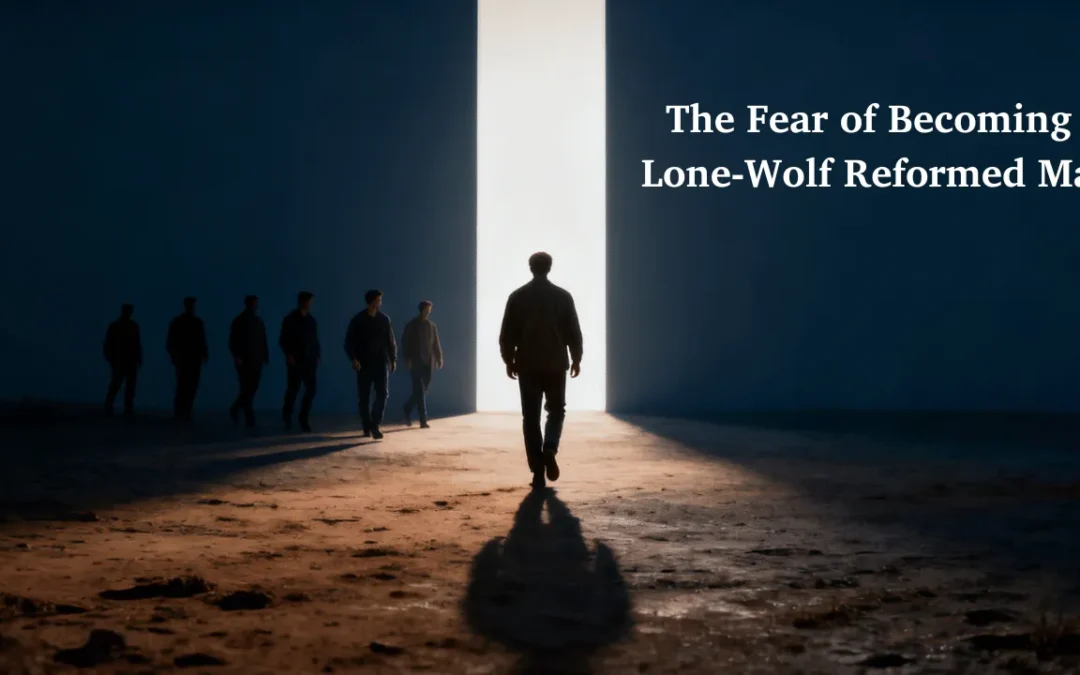
To care deeply about doctrine, worship, church order, and faithfulness is not a defect. The Scriptures commend discernment. They warn against compromise. They call believers to guard the deposit entrusted to them.
But conviction carries a danger. It can slowly isolate.
There is a difference between standing firm and standing alone. And sometimes, the line between the two is thinner than we imagine.
Throughout church history, reform has required courage. Men have stood against error when silence would have been easier. Yet reformers also understood the danger of independence detached from accountability. The Christian life is not meant to be lived as a solitary theologian correcting the world from a distance.
The New Testament speaks of elders in plurality. Of mutual submission. Of bearing with one another in love. Even the Apostle Paul submitted his gospel to the other apostles to ensure he was not running in vain.
Conviction must remain teachable.
There is a subtle pride that can emerge when a man becomes convinced that he alone sees clearly. He may not intend arrogance. He may genuinely desire purity and order. But if he slowly withdraws from fellowship whenever imperfections arise, he risks cultivating isolation rather than reform.
Every church has weaknesses. Every elder has blind spots. Every congregation reflects both grace and remaining sin. The question is not whether flaws exist, but how one responds to them.
Some stay where they should leave. Others leave where they should labor patiently.
The lone-wolf posture often begins quietly. A man grows dissatisfied. He sees structural weaknesses. He detects inconsistencies. He longs for greater seriousness. These concerns may be legitimate. But without humility, they harden into suspicion.
Isolation feels principled. But Scripture does not call us merely to precision. It calls us to unity in truth.
The solution is not to suppress conviction. Nor is it to tolerate error for the sake of comfort. Rather, it is to pursue reform within the bounds of biblical order — with gentleness, patience, and accountability.
A man must ask himself difficult questions: Am I withdrawing because of conscience, or because of impatience? Am I seeking purity, or avoiding friction? Do I desire correction as readily as I offer it?
These questions are not signs of weakness. They are safeguards against pride.
The mature Christian is not one who never disagrees. It is one who disagrees without severing unnecessarily.
There are times when conscience demands separation. Scripture recognizes that. But separation should feel weighty, not triumphant.
The goal is not to be the most precise man in the room. The goal is to be faithful under Christ.
Conviction without humility breeds isolation. Humility without conviction breeds compromise. Faithfulness requires both.
The man who fears God will seek accountability, even when it is uncomfortable. He will welcome correction. He will resist the temptation to build a personal echo chamber of agreement.
Reformed theology has always emphasized the sovereignty of God.
That sovereignty includes His providential placement of imperfect people around us for our sanctification.
To guard against becoming a lone-wolf believer is not to dilute conviction. It is to remember that we are sheep before we are critics. And sheep are meant to live within a flock.